Why Data Privacy Matters
High-profile hacks and leaks of consumer data don’t often dominate the news cycle for long in recent years, but they’re still frighteningly common. From the rise in ransomware gangs seeking large payouts to data breaches of private information that allow unauthorized access due to nothing more than a lack of password protection, consumers are right to be worried about how their data is handled, stored, processed, and used.
Besides the PR nightmare and loss of customer trust that follows in the wake of a data breach, other concerns include:
Financial Penalties: GDPR fines can reach up to €20 million or 4% of global turnover for companies that operate in the European Union (EU)..
Reputation Damage: Privacy violations reduce consumer trust and impact brand loyalty.
Email Deliverability Risks: Poor compliance can lead to blacklisting by email service providers.
On the other hand, if you’re a company or marketing department that works hard to follow best practices when it comes to protecting consumer data, benefits are likely to include:
Competitive Advantage: If you follow data privacy regulations and best practices, you’re more likely to enjoy a competitive advantage over others in your industry by simply never having to send your customers an email with a subject line that says, “We’ve been hacked. Your data may have been compromised...”
High Email Deliverability: As email continues to drive high ROI for marketers, it’s important to recognize that good data compliance and practice can keep your deliverability rates high.
Positive Customer Experiences: People like it when they feel safe online and in real life. Following regulations and best practices around data privacy and compliance will lead to a positive association with your brand.
Data Privacy Law: Key Regulations Marketers Need to Know
Complying with data privacy laws isn’t just for the legal team - it’s a must-know for marketers, too. Knowing these laws inside and out not only keeps your campaigns compliant but builds trust with your audience before they even click “subscribe.”
1. GDPR (General Data Protection Regulation)
Who It Affects: Companies doing business with EU residents.
Requirements:
Obtain explicit consent before sending marketing emails.
Allow users to opt out communications easily.
Keep records of consent for accountability.
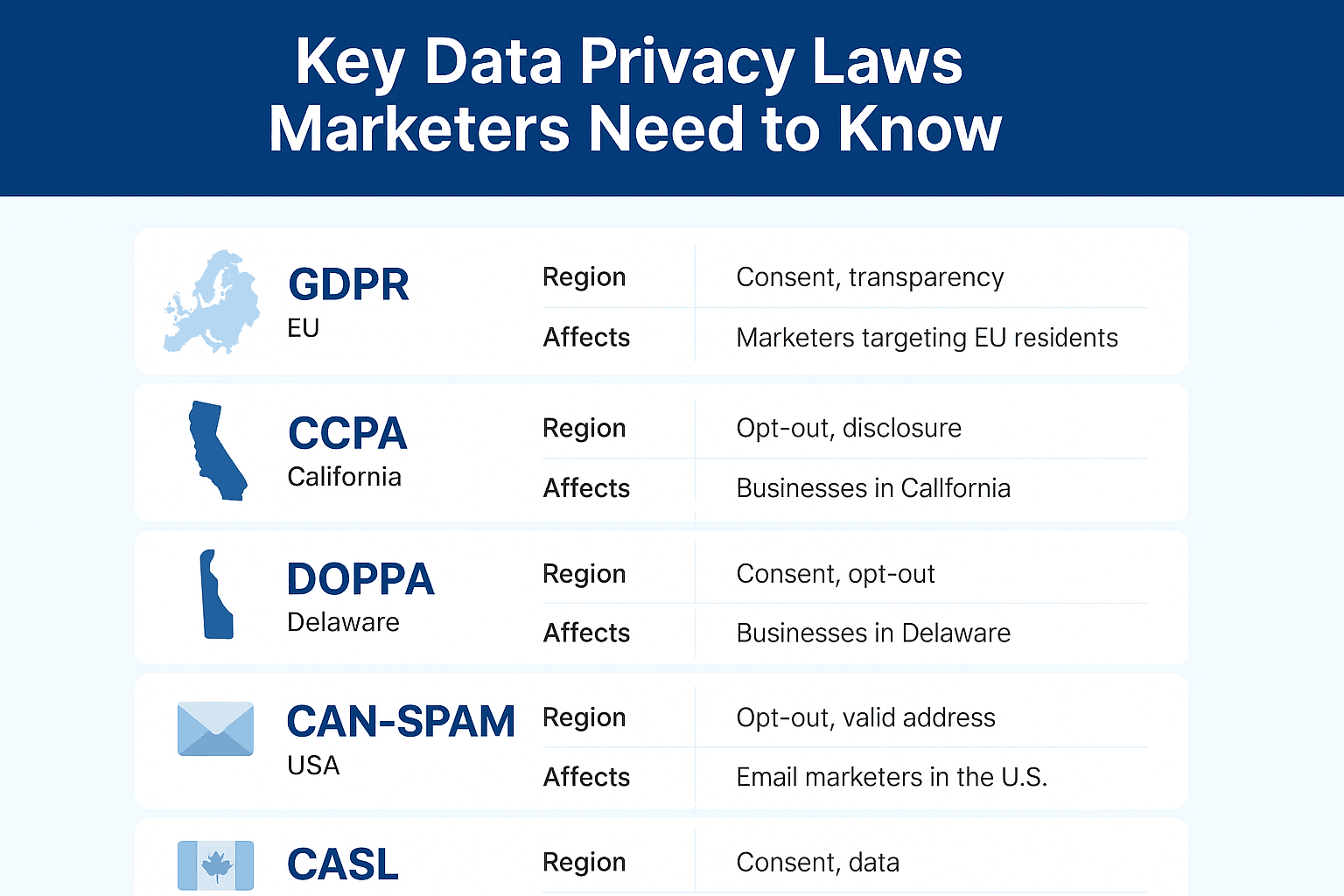
2. CCPA (California Consumer Privacy Act)
Who It Affects: Companies doing business with California residents.
Requirements:
Provide transparency about data collection and usage.
Offer an opt-out option for data sharing.
Honor requests to delete personal data.
3. DOPPA (Delaware Online Privacy and Protection Act)
Who It Affects: Companies doing business with Delaware residents.
Requirements:
Obtain explicit consent before collecting or sharing any personal data, including race and location.
Allow an opt-out for data sales and targeting ads.
No use of personal data to discriminate against users.
4. Other Laws
CAN-SPAM Act (US): Prohibits deceptive subject lines and requires clear opt-out options.
CASL (Canada): Requires explicit or implied consent for email marketing.
How We Got Here: A Brief History of User Data Generation and Exploitation
While the total tale of how we got here is long and complicated, a few highlights can give valuable insight.
How to Stay Compliant While Using Email Lists
Whether you’re operating only in U.S. states or you have an international corporation, the same best practices hold for email lists. Yes, it’s true that the EU and a couple of U.S. states are stricter than other regions, but following the strictures of the European Union and California will keep you safer - and protect your customers’ privacy - overall. Here’s how to stay compliant while engaging in email marketing efforts:
Back in 1994, Lou Montulli invented web cookies to improve internet user experience, while also protecting internet user privacy. Inadvertently, however, his cookie became a means by which internet users - and their data and behavior - could be tracked and monetized. In just a year, a couple of companies were making use of third-party cookies to specifically target individual users throughout the web.
Over time, this tracking and monetization has resulted in astonishingly large troves of personal data of almost everyone who’s ever been on the web.
Privacy standards, regulations, and data protection laws meant to limit the collection, storage, and unauthorized use of people’s personal data have emerged in the past decade or so. Everything from data management and collection to data processing and storage is now sometimes dictated by law, depending on where you do business.

1. Collect Emails Responsibly
Use first-party data practices.
Use double opt-in processes to verify consent.
Avoid purchasing email lists, as they often include unverified or non-consenting contacts.
2. Prioritize Transparency
Practice data minimization - only gather the information you actually need.
Clearly communicate how you will use subscribers’ data.
Provide easy access to your privacy policy and terms.
3. Clean and Validate Your Email Lists
Have your email lists cleaned regularly to ensure accuracy.
Regularly remove invalid, outdated, or unengaged emails.
Validate email addresses when you gather them to ensure accuracy and compliance.
4. Offer Control to Subscribers
Include unsubscribe links in every email.
Allow users to manage their preferences, such as frequency or types of emails received.
5. Maintain Documentation
Keep records of when and how consent was obtained.
Log data deletion requests and other compliance-related actions.
Consider hiring a Data Protection Officer if you don’t already have someone in the role.
Practical Compliance Tips for Marketers
What marketing initiatives does your marketing team have underway? How might customer data and privacy protection play a role in the ecosystem of marketing channels your brand routinely engages in? Regardless of what you’re up to, practical compliance is the baseline. Here are some tips all marketers should follow:
Segment Your Lists: Separate EU-based contacts to apply GDPR-specific privacy requirements.
Stay Updated: Privacy laws evolve - review your practices regularly.
Invest in Tools: Use software to manage consent, track compliance, and validate email lists.
Compliance is a Non-Negotiable
Data privacy and compliance protect more than just your business - they build trust with your audience. By staying informed about regulations like GDPR and CCPA and implementing these best practices, marketers can create campaigns that are both impactful and lawful.
Don’t risk fines or your reputation. Center user consent, and prioritize privacy and compliance in every email marketing strategy.
If you’re worried about data privacy compliance in relation to email marketing, NeverBounce can help.